
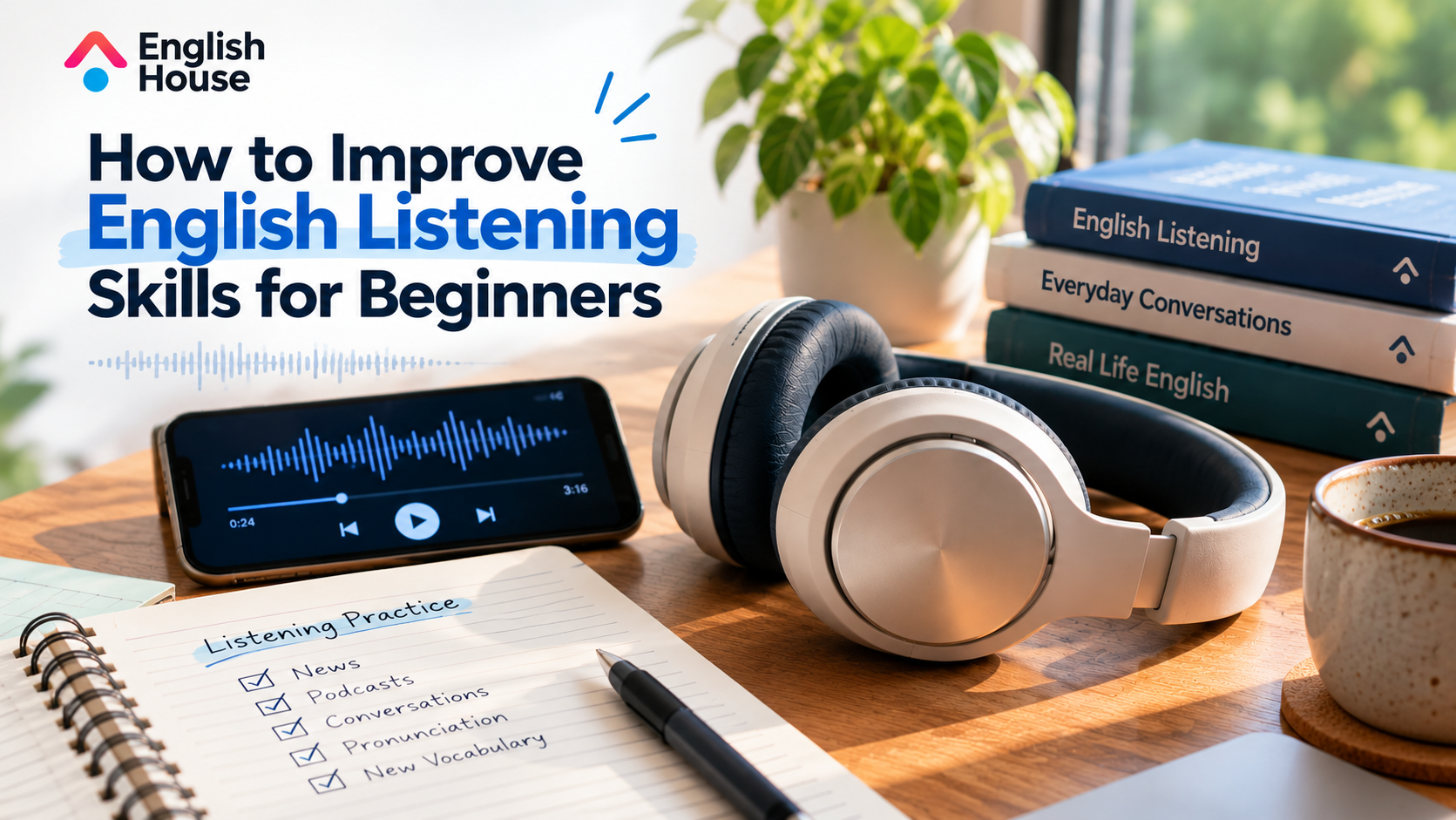

You can read English fairly well and even know plenty of grammar, but the moment someone speaks, the words seem to rush past. If that sounds familiar, you’re not alone. Listening is the skill most beginners struggle with and it’s also the one that makes the biggest difference when you start learning spoken English.
The good news is that listening is a skill, not a talent. With the right habits, anyone can build it.
Why English Listening Skills Are Important
Listening is the foundation of speaking. Think about how you learned Malayalam: you heard it for years before you spoke it confidently. English works the same way.
Strong listening helps you:
- Understand what people are actually saying in conversations, meetings and interviews
- Pick up natural pronunciation, rhythm and intonation
- Learn new vocabulary in context
- Respond quickly and confidently instead of freezing
This is why any good Spoken English course puts listening practice right at the start.
Common Problems Beginners Face When Listening to English
Speed: Native speakers talk fast and words blend together.
Unfamiliar accents: British, American, Indian and Australian English all sound different.
Missing vocabulary: One unknown word can make you lose the whole sentence.
Translating in your head: By the time you translate one sentence from English to Malayalam, the speaker is three sentences ahead.
Connected speech: “What do you want to do?” often sounds like “Whaddya wanna do?”
If you recognise yourself in this list, relax. Every fluent speaker started exactly here.
Effective Ways to Improve English Listening Skills
Start with slow, simple content.
Choose audio made for learners, with clear pronunciation and everyday topics. Moving to fast native speech too early only leads to frustration.
Listen more than once.
Play the same clip three times: first for the general idea, then for details and finally while reading
the transcript.
Use subtitles wisely.
Begin with English subtitles. This trains your ear to match sounds with words. Later, try without them.
Try shadowing.
Pause after a sentence and repeat it aloud, copying the speaker’s tone and speed. It improves listening and speaking together.
Think in English.
Try not to translate. Aim to understand the meaning directly, even if you only catch half the words.
Focus on understanding, not perfection.
You don’t need every word. Catching the main idea is a win.
A Simple 15-Minute Daily English Listening Routine
Consistency matters more than long sessions. Try this routine every day:
Minutes 1-5: Listen to a short clip (a news summary, a learner podcast or a short video) without pausing. Just get the general idea.
Minutes 6-10: Listen again with the transcript or English subtitles. Note down 3 to 5 new words or phrases.
Minutes 11-13: Replay a few sentences and shadow them aloud.
Minutes 14-15: Write or say two sentences about what you heard. Fifteen minutes a day adds up to over 90 hours in a year. That’s a real difference.
Best Resources for English Listening Practice
You don’t need expensive tools to get started. These are free and beginner-friendly:
- BBC Learning English: short, clear episodes with transcripts
- VOA Learning English: news read at a slower pace for learners
- TED-Ed videos: short, engaging and subtitled
- YouTube channels for English learners: look for ones with captions and clear speech
- Podcasts for learners: easy to fit in while commuting or doing chores
- English movies and series: start with shows you already know, with English subtitles on
Pick two or three resources and stay with them rather than jumping between many.
Common Listening Mistakes to Avoid
- Giving up when you miss a word.
- Only listening passively.
- Choosing content that’s too hard.
- Skipping repetition.
- Expecting overnight results.
Frequently Asked Questions
1. How long does it take to improve English listening skills?
With daily practice, most beginners notice a clear improvement within 6 to 8 weeks. Fluent understanding takes longer, but steady progress is very achievable.
2. Can I improve my listening without speaking to anyone?
Yes, you can build a strong base on your own. But practising with a teacher or fellow learners speeds things up, because you hear real, natural responses.
3. Is it okay to learn English through Malayalam explanations?
Absolutely. Many learners understand grammar and pronunciation faster when concepts are explained in their mother tongue. This is why Spoken English classes in Malayalam are popular across Kerala.
4. What if I understand when I read but not when I listen?
That’s very common. It simply means your eyes are ahead of your ears. Regular listening practice closes the gap.
How English House Can Help You Improve Your Spoken English
Practising alone is a great start, but guidance makes the journey faster and far more enjoyable. For the last 9 years, English House has been at the forefront of online Spoken English training in Kerala, helping learners across the globe. Our expert trainers understand exactly where beginners struggle and our tried and tested methods, refined over nearly a decade, bring real, visible progress through practical listening and speaking activities.
Our friendly, supportive trainers create a relaxed space where mistakes are simply part of learning and with flexible timings and trainer availability 24/7, you can learn at a pace and schedule that suits you. With Spoken English classes in Malayalam, you can grasp every concept in the language you’re most comfortable with and build real-life communication skills step by step. If you’re ready to turn your daily listening practice into confident conversation, reach out to English House and take the next step in your Spoken English journey.
